Honda Canada’s owner’s manuals give a CR2032 for every keyless remote listed, and a CR1620 for the master key with a remote in the 2016 CR-V and 2018 Civic.
Which Honda?
The battery it takes
As an Amazon Associate, What Battery For earns from qualifying purchases.
Honda key batteries by model
| Model and key | Battery |
|---|---|
| 2025 Civic | CR2032 |
| 2024 HR-V | CR2032 |
| 2023 CR-V | CR2032 |
| 2023 Pilot | CR2032 |
| 2022 Civic | CR2032 |
| 2021 Ridgeline | CR2032 |
| 2020 Odyssey | CR2032 |
| 2018 Civic (smart entry remote with a built-in key) | CR2032 |
| 2018 Civic (key blade with remote buttons) | CR1620 |
| 2016 CR-V (smart entry remote with a built-in key) | CR2032 |
| 2016 CR-V (key blade with remote buttons) | CR1620 |
From the Canadian editions of Honda’s manuals. Check the code on the old battery if your car was sold elsewhere.
How to change it, in Honda’s steps
From Honda’s 2023 CR-V manual, for the keyless remote:
- Take out the built-in key.
- Wrap the key grip in a cloth so it won’t scratch the remote, and pry the upper half of the cover off at the slot. The 2025 Civic manual has you do this with the remote’s buttons facing down.
- Pry the old battery out by its edge with a flat-tip screwdriver and fit the new one with the correct polarity.
The master key with a remote transmitter in the 2016 CR-V and 2018 Civic opens differently: undo the cover’s screw with a small Phillips screwdriver, then open the transmitter.
If the remote battery is weak
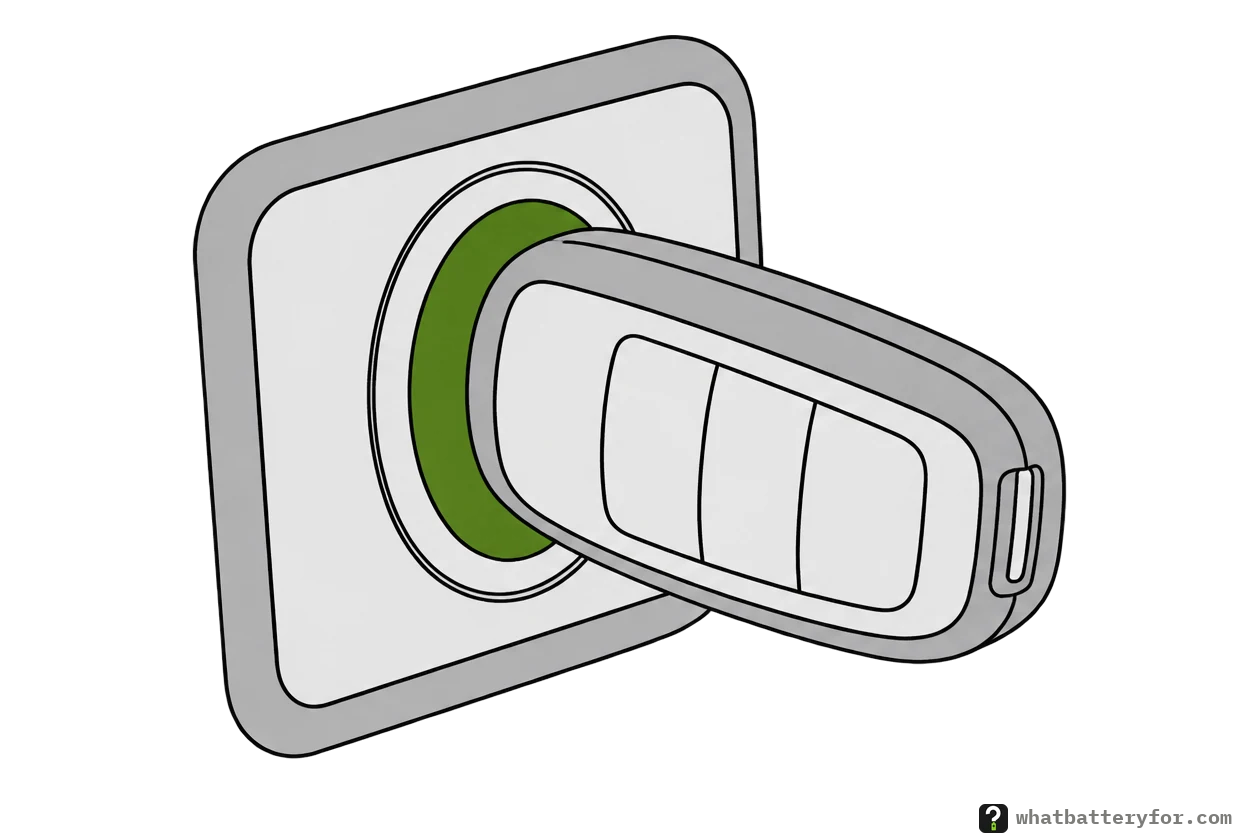
When it’s weak, the 2023 CR-V manual says a beeper sounds and the message To start, touch start button with emblem side of remote appears. Press ENGINE START/STOP, and it flashes for about 30 seconds.
While it flashes, touch the center of the button with the H logo on the remote, its buttons facing you. The button then stays on for about 10 seconds: press the brake pedal and press ENGINE START/STOP while it’s on.
Keep coin batteries away from children
Honda warns of a chemical burn hazard: the remote’s battery can cause severe internal burns and even death if swallowed, so keep new and used batteries away from children.
The National Capital Poison Center says that if anyone swallows a battery, immediately call the 24-hour National Battery Ingestion Hotline at 1-800-498-8666 or your poison center at 1-800-222-1222. Don’t delay. Immediate treatment decreases severity.