Watt-hours are amp-hours times volts, the FAA’s own rule. For milliamp-hours, divide by 1,000 first.
V
Type the capacity and the volts from the battery’s label.
Watt-hours
37Wh
10,000 mAh × 3.7 V ÷ 1,000 = 37 Wh. Within FAA PackSafe’s 100 Wh limit for a spare lithium ion battery.
FAA PackSafe (last updated August 11, 2026, read October 25, 2026): spare lithium batteries and power banks go in carry-on bags only, and airlines may set stricter limits.
A worked example
A 2,600 mAh cell at 3.6 V is 2.6 Ah, so it holds 2.6 × 3.6 = 9.36 Wh. Newer lithium ion batteries have the Wh rating marked on them, the FAA says, so check the label first.
RatingsmAh and V
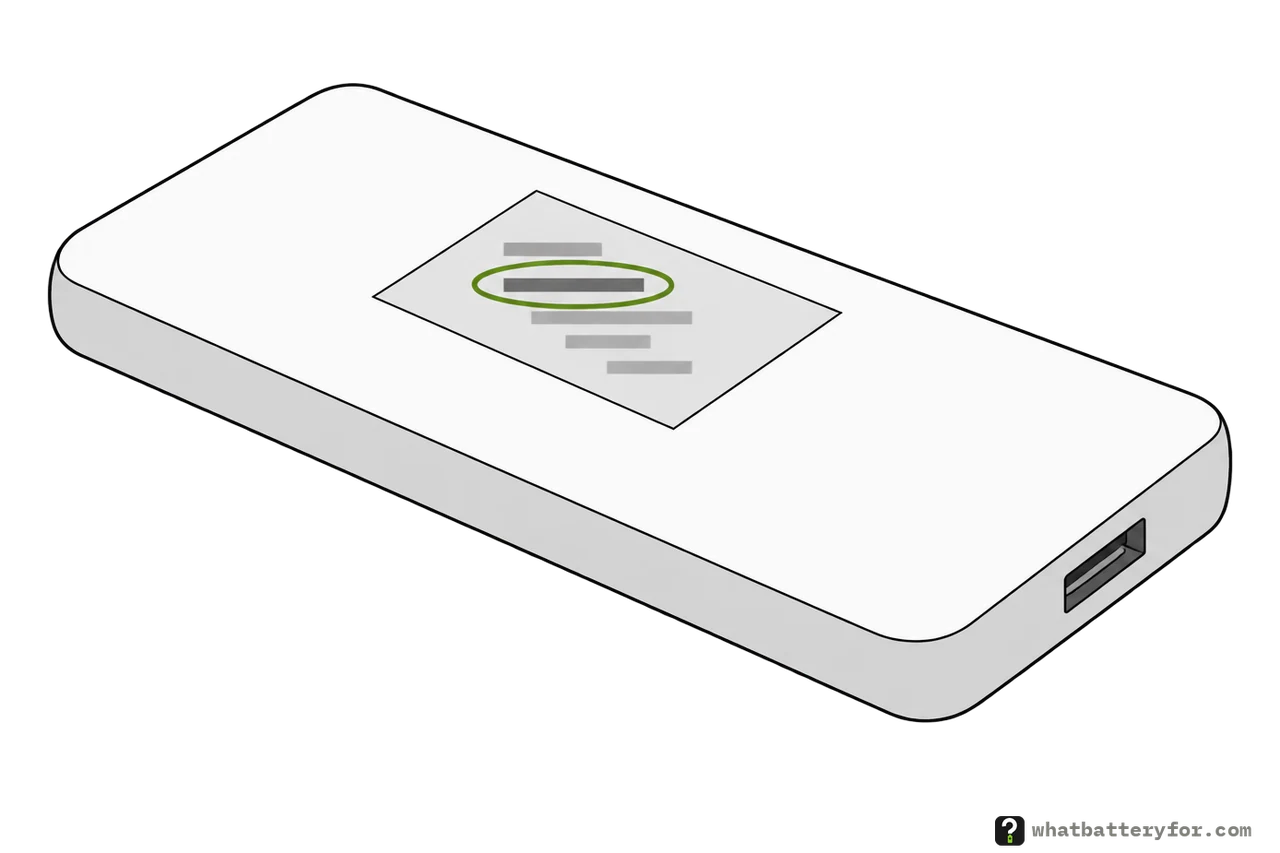
The ratings are in the small print on the back or bottom: the mAh and the volts, and on many the Wh.
FAA PackSafe’s lines for spare batteries
What FAA PackSafe allows for a spare lithium ion battery, by its Wh
Watt-hours
What FAA PackSafe allows
Up to 100 Wh
In carry-on bags
101 to 160 Wh
Up to two spares, with airline approval, in carry-on bags
FAA PackSafe (last updated August 11, 2026, read October 25, 2026) puts spare lithium batteries, power banks included, in carry-on bags only, with the terminals protected from short circuit. Many airlines set stricter limits, so the FAA says to check with yours before you travel.
Common questions
How many Wh is a 20,000 mAh power bank?
At 3.7 V, a 20,000 mAh power bank holds 74 Wh: 20,000 × 3.7 ÷ 1,000. That's under FAA PackSafe's 100 Wh limit for a spare battery.
The flying limits are FAA PackSafe’s, last updated August 11, 2026 and read on October 25, 2026. Checked against published data from Federal Aviation Administration.
See the source
FAA, PackSafe: Lithium Batteries (last updated August 11, 2026)
Battery sizes come from battery makers' datasheets and device makers' own manuals and help pages. Check your device's manual or the old battery before you buy. If anyone may have swallowed a battery, call the National Battery Ingestion Hotline at 1-800-498-8666 or your poison center at 1-800-222-1222 straight away.