An 18650 is a lithium-ion cell about 18 mm across and 65 mm long: Molicel’s is 3.6 V, 18.6 mm across and 65.2 mm long at most. A 21700 is bigger, 21.7 x 70.2 mm, and Fenix says its 21700 doesn’t fit 18650 flashlights.
18650 and 21700 cells from their makers
| Cell | Diameter x length | Volts | Capacity | Watt hours |
|---|---|---|---|---|
| Molicel INR-18650-P28A (bare) | 18.6 x 65.2 mm max | 3.6 V | 2.8 Ah | 10.08 Wh |
| Molicel INR-21700-P42A (bare) | 21.7 x 70.2 mm max | 3.6 V | 4.2 Ah | 15.12 Wh |
| Fenix ARB-L18-3400U (protected 18650) | 18.75 x 70 mm | 3.6 V | 3400 mAh | 12.24 Wh |
| Fenix ARB-L21-5000 (protected 21700) | 21.5 x 76 mm | 3.6 V | 5000 mAh | 18 Wh |
Watt hours are volts times amp hours, the FAA’s method; the makers give the volts and capacity. Fenix’s batteries weigh 55 g and 72.5 g, and Molicel’s 18650 46 g at most.
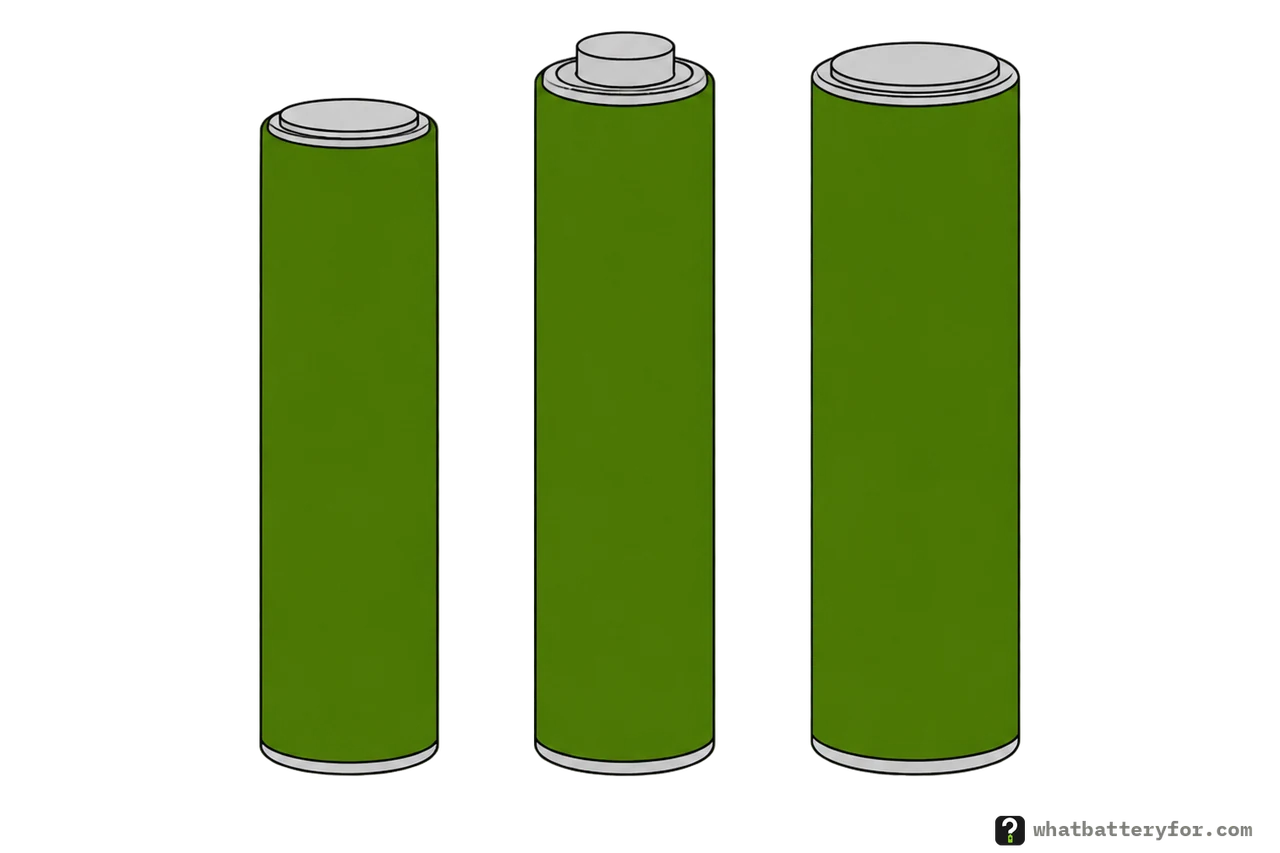
Protected and bare cells
Fenix says its ARB-L18-3400U has “a protection circuit in the anode to help prevent short circuits, overcharge/discharge, and overheating”. At 70 mm it is 4.8 mm longer than Molicel’s bare 18650, so check the length your light’s maker gives, or the battery it names.
LG Energy Solution says it supplies its cells only to industrial customers such as battery pack makers, and that its cells “lack control functions itself, so they must be used in battery pack form”. It doesn’t sell single cells such as the 18650 to private consumers, and it strongly discourages buying its cells through online shops.
Use loose cells only in a light or charger whose maker names them. Don’t build packs or rewrap cells yourself.
Handling loose cells
Molicel’s safety data sheet says:
- Don’t short, open, crush, puncture, burn or solder a cell.
- Don’t mix cells of different types or brands, or new and used cells.
- Don’t use or charge a damaged, defective or deformed cell.
- Store them cool and dry, ideally at 25°C, give or take 5°C, and out of children’s reach.
LG Energy Solution’s safety guide adds: cover the terminals in storage, don’t keep cells with metal objects, and don’t use a battery that has been dropped.
Flying with them and throwing them away
Each cell in the table is well under the FAA’s 100 Wh limit for lithium-ion. Spare cells go in carry-on bags only, with their ends protected: flying with batteries has the FAA’s rules. EPA says lithium-ion batteries don’t go in household garbage or recycling bins; storing and throwing away batteries covers where they go.