Keep batteries in a cool, dry place at room temperature, in their packaging; a fridge isn’t needed. Recycle used ones: EPA says lithium, coin and rechargeable batteries don’t go in the household trash, and the rules differ by state and town.
How long batteries keep
| Battery | Keeps | Store at |
|---|---|---|
| Alkaline AA (Energizer E91) | 10 years at 21°C; about 3% of capacity lost a year | -40 to 50°C |
| Lithium AA (Energizer L91) | 25 years at 21°C | -40 to 60°C |
| Rechargeable NiMH (Energizer) | 50% to 80% of its charge after 12 months | -20 to 30°C, charged |
| Lithium-ion cell (Molicel) | Not given | 25°C, give or take 5°C |
Energizer’s alkaline handbook says cold slows the loss and warmth speeds it up.
Where to keep them
- Somewhere cool and dry at normal room temperature. A fridge isn’t necessary, Energizer says, and Duracell doesn’t recommend one.
- In the original packaging until you use them, as Duracell suggests.
- Never loose in a pocket or purse with coins or paper clips: Energizer warns they can short and get hot.
- Out of devices you won’t use for a long time.
- Coin and button cells, spare or used, out of children’s sight and reach, as the National Capital Poison Center advises.
The National Capital Poison Center says that if anyone swallows a battery, immediately call the 24-hour National Battery Ingestion Hotline at 1-800-498-8666 or your poison center at 1-800-222-1222. Don’t delay. Immediate treatment decreases severity.
Which batteries can go in the trash
| Battery | In household trash? | Where it goes |
|---|---|---|
| Alkaline and zinc carbon | In most communities, yes | EPA recommends a battery recycler or your local authority |
| Lithium single-use (AA, CR123A) | No | A battery recycler or household hazardous waste |
| Button and coin | No | Recycler, store takeback or household hazardous waste |
| Rechargeable: NiMH, NiCd, lithium-ion | No | Recycler, store takeback or household hazardous waste |
| Devices with a built-in battery | No, for lithium-ion | A certified electronics recycler |
| Lead-acid | No | A battery retailer or household hazardous waste |
EPA says battery types are told apart by their markings, not their shape or label color. Check for the word lithium.
Taping or bagging them
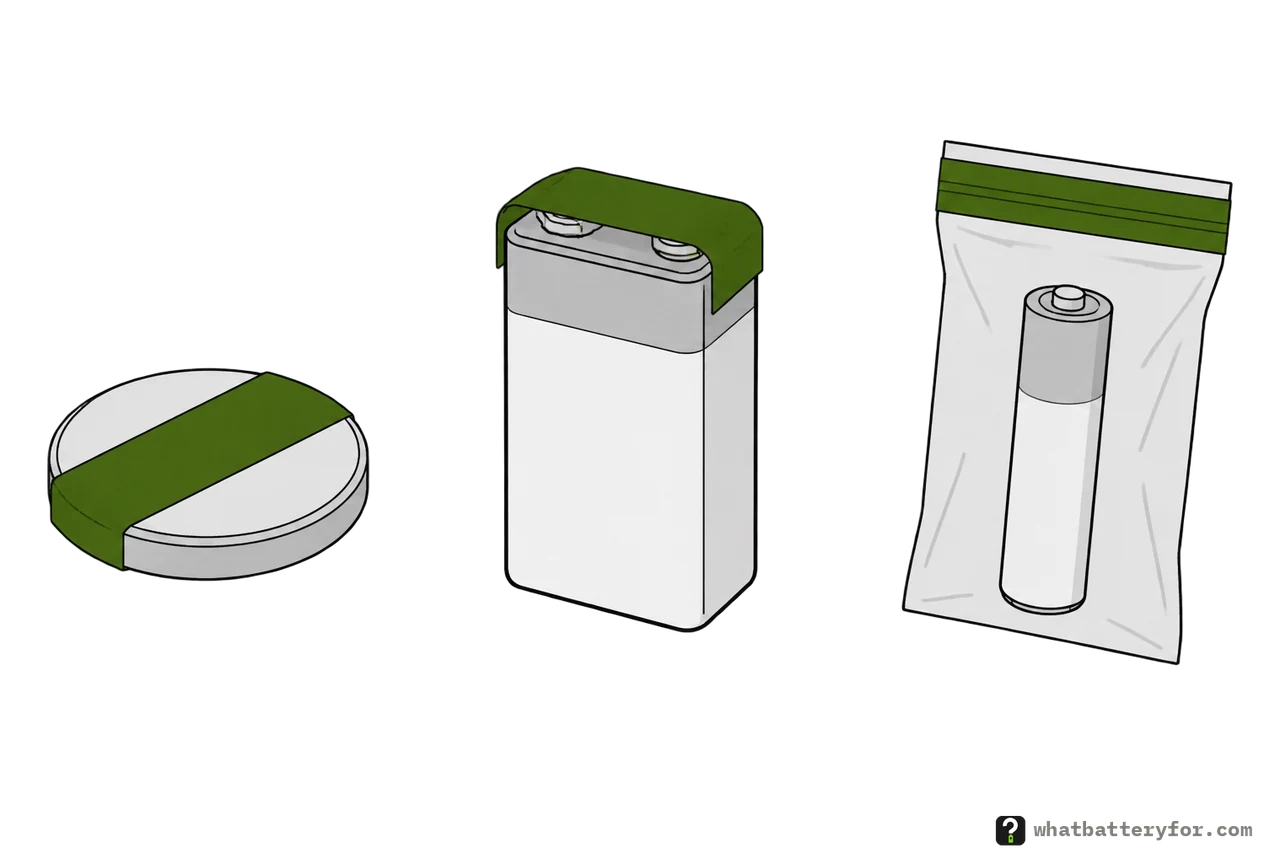
Used batteries can still hold enough charge to spark if their ends touch metal or each other, The Battery Network says. For lithium, coin and rechargeable batteries, EPA and The Battery Network both say to put each in its own plastic bag or tape over the terminals:
- Bagging each battery is The Battery Network’s preferred way.
- For tape, it names clear packing tape, electrical tape or duct tape over the positive end, and says to avoid masking, painter’s or Scotch tape, which can fall off.
- EPA says to use non-conductive tape, such as electrical tape, over the terminals, or tape around the whole button.
- Plain alkaline batteries need no tape unless they say Lithium, The Battery Network says.
Duracell suggests keeping used batteries in a non-metal container in a well-ventilated place, and taking them to collection regularly rather than all at once.
Damaged, swollen or recalled batteries
The Battery Network treats a swollen, leaking, overheating or punctured lithium-ion battery as damaged: it can’t be dropped off with other batteries. It doesn’t take recalled batteries at all, and says to follow the maker’s instructions. EPA also says to contact the maker about a damaged one.
Rules differ by place
Some states have their own battery recycling laws, EPA says, and The Battery Network keeps a map of them. Energizer’s alkaline handbook says the disposal status of alkaline batteries should be confirmed in the state or country where they are thrown away. Check with your town or state before you throw any battery out.